

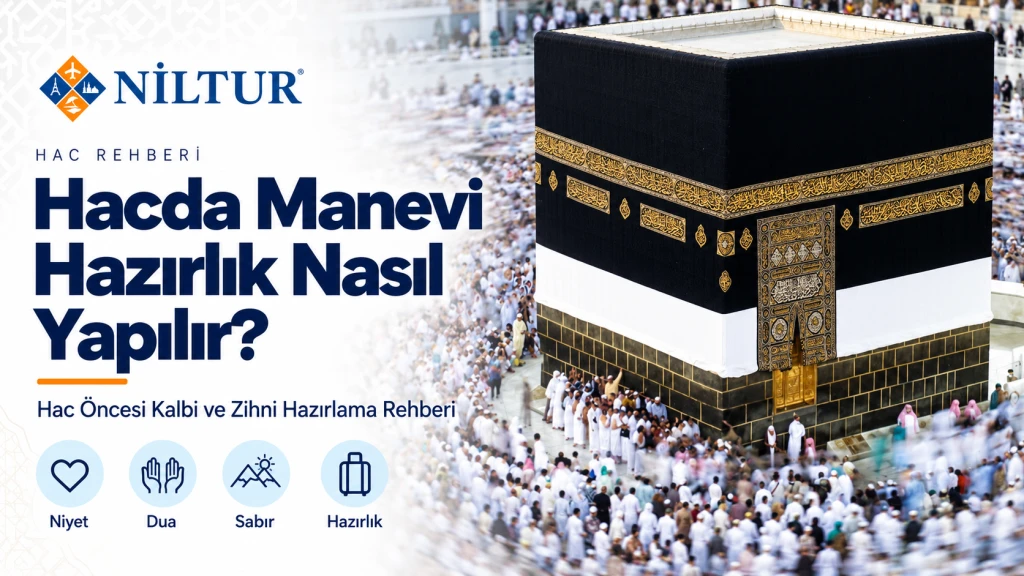
The Hajj journey is not merely a matter of preparing a passport, plane tickets, a hotel, and a suitcase. The real preparation for Hajj begins in a person’s heart and intentions.
When describing the Hajj journey, the Holy Qur’an draws attention to spiritual preparation alongside material preparation:
“Provide for yourselves; indeed, the best provision is piety.”
Surah Al-Baqarah, 2:197
This verse reminds those preparing for Hajj that the most valuable provision they can take with them is not just their belongings, but piety, patience, good character, and turning toward Allah.
Spiritual preparation before Hajj begins with learning the meaning of the worship, repenting, seeking forgiveness from others, reviewing one’s intentions, and preparing consciously for the journey.
What Should Your Intention Be Before Going on Hajj?
Sincere intention is at the heart of the Hajj pilgrimage.
The Prophet Muhammad said:
“Actions are judged by intentions.”
This hadith is one of the most fundamental hadiths found in Sahih al-Bukhari and Sahih Muslim.
A person preparing for Hajj should have an intention that is:
- Free of ostentation
- Based on seeking Allah’s pleasure
- Aimed at spiritual renewal
- Focused on understanding the meaning of the worship
.
Hajj is not a journey undertaken merely to “have been there”; it is a profound act of worship that can mark a new beginning in a person’s life.
Why Is Repentance Important Before Hajj?
The Hajj journey is an important opportunity to face one’s past and turn toward Allah.
Sincere repentance before going on Hajj includes:
- Regretting one’s sins
- Intending to leave one’s mistakes behind
- Asking Allah for forgiveness
- Making amends, as far as possible, where the rights of others are involved
These are important parts of spiritual preparation.
The Qur’an tells believers:
“O you who believe! Turn to Allah in sincere repentance.”
Surah At-Tahrim, 66:8
Repentance before Hajj is one of the most important preparations for deepening the spiritual meaning of the worship.
Should You Seek Forgiveness Before Hajj?
One of the matters to which the greatest importance should be given before Hajj is the rights of others.
It is an important part of spiritual preparation to seek forgiveness and settle matters with:
- Family members
- Relatives
- Coworkers
- Friends
- People whose rights you have violated
.
The Prophet Muhammad advised that if a person has wronged their brother, they should seek his forgiveness in this world, before they are held to account in the Hereafter.
Therefore, before going on Hajj, it is important to resolve resentments as far as possible and to be mindful of the rights of others.
The Relationship Between Hajj and Piety
The emphasis on piety is often central to the Qur’anic verses about Hajj.
Surah Al-Baqarah, verse 197, says:
“The best provision is piety.”
This shows that Hajj does not consist solely of outward actions.
Piety means that a person:
- Is conscious of their responsibility to Allah
- Avoids sins
- Respects the rights of others
- Is patient
- Performs acts of worship mindfully
.
In this sense, Hajj is a training in piety that should continue in a person’s daily life as well.
Why Is Patience So Important During Hajj?
During Hajj, pilgrims may encounter:
- Crowds
- Heat
- Long waits
- Extensive walking
- Restricted movement
- Being among people from different cultures
.
The Qur’an specifically draws attention to conduct during Hajj:
“Whoever undertakes Hajj during those months, entering the state of ihram, must refrain from sexual relations, sin, and argument during Hajj.”
Surah Al-Baqarah, 2:197
This verse clearly demonstrates the importance of patience in the Hajj pilgrimage.
It is important not only for pilgrims to complete the rites, but also to control their anger and show good character throughout the process.
Why Is Good Character Important During Hajj?
Hajj is an act of worship that tests a person’s character among crowds.
It is part of the spiritual nature of the worship to:
- Make way for others
- Offer help
- Wait your turn
- Avoid arguments
- Support older people
- Be tolerant
.
The Prophet Muhammad gave the glad tidings that a person who performs Hajj while avoiding indecent speech and conduct will be cleansed of their sins.
The hadith narrated in Sahih al-Bukhari states:
“Whoever performs Hajj for Allah and refrains from indecent speech and conduct will return as pure as the day their mother gave birth to them.”
.
Should You Prepare a List of Prayers for Hajj?
Yes. You can prepare not only your suitcase before Hajj, but also a list of prayers.
Pilgrims can make a note in advance of the things they wish to pray for, including:
- Themselves
- Their family
- Deceased loved ones
- Health
- Provision
- Spiritual growth
- The Muslim community
- Forgiveness
.
This approach can help people focus on their prayers, especially during spiritually intense times such as the Day of Arafat.
How Can You Prepare Spiritually for the Day of Arafat?
Arafat is one of the spiritual high points of the Hajj journey.
The Prophet Muhammad said:
“Hajj is Arafat.”
.
Therefore, the Day of Arafat should be devoted to:
- Prayer
- Repentance
- Remembrance of Allah
- The Qur’an
- Reflection
- Seeking forgiveness
.
It is beneficial for pilgrims to prepare mentally for the day, leave worldly concerns behind as much as possible, and focus on their worship.
Why Is It Beneficial to Read the Qur’an Before Hajj?
Reading the verses about Hajj in advance deepens one’s understanding of the worship.
In particular, the verses in:
- Surah Al-Baqarah, 196–203
- Surah Al-Hajj, 26–37
contain important information about the rites of Hajj, sacrifice, piety, and sacred places.
Reading the translations and commentaries of these verses before setting out on the Hajj journey helps pilgrims experience the acts of worship in the holy lands with greater awareness.
The Call to Hajj in Surah Al-Hajj
In the Holy Qur’an, Abraham is told:
“Proclaim the Hajj to all people. They will come to you on foot and on every lean camel from every distant path.”
Surah Al-Hajj, 22:27
This verse reminds us that Hajj is a divine invitation that has continued for centuries.
Setting out on the journey with the awareness that one is answering this invitation makes the Hajj experience more than just a tourist trip or an organized process.
Should You Learn the Rites of Hajj Before Going?
Yes. It is very important to know the basic rites of worship before going on Hajj.
In particular, you should learn about:
- Ihram
- Tawaf
- Sa’i
- Arafat
- Muzdalifah
- Mina
- Stoning the Jamarat
- Sacrifice
- Shaving or trimming the hair
.
Lack of knowledge can cause unnecessary anxiety in the holy lands.
Why Is It Important to Attend Hajj Training?
Pre-Hajj training is important from both religious and operational perspectives.
These sessions may cover topics such as:
- The order of the rites
- The schedule of Hajj days
- Group travel
- Hotel arrangements
- Meeting points
- Ihram rules
- Health and safety
.
This training is especially helpful for those going on Hajj for the first time.
Should You Resolve Grievances Before Hajj?
Yes, as far as possible.
Setting out on the Hajj journey with:
- Grudges
- Resentment
- Estrangement
- Unresolved family issues
can affect a person’s peace of mind.
The purpose of spiritual preparation is to begin the journey with a heart that has been made as clear as possible.
Therefore, forgiving others, apologizing, and seeking forgiveness can be important preparations before Hajj.
What Should You Do About Debts Before Hajj?
It is important to review your financial responsibilities before the Hajj journey as well.
You should act as openly and responsibly as possible with regard to debts that need to be repaid and the rights of others.
Before a long journey, it is beneficial both spiritually and practically to:
- Settle your debts
- Inform your family
- Make any necessary payment arrangements
.
Why Is It Important to Avoid Ostentation During Hajj?
Hajj is an act of worship performed for the sake of Allah.
Therefore, turning the journey into a means of:
- Social status
- Ostentation
- Competition
- Claiming superiority over others
is incompatible with the spirit of worship.
The fact that ihram brings everyone together in a similar appearance also powerfully reflects Hajj’s message of equality and humility.
The Spiritual Meaning of Ihram
Ihram symbolizes pilgrims setting aside many of the distinctions of their daily lives and turning toward Allah with an awareness of their servitude to Him.
Regardless of wealth, profession, or social status, people turn to the same act of worship in similar garments.
This can remind people of:
- Humility
- Equality
- Death and the Hereafter
- The fleeting nature of worldly blessings
.
The Spiritual Dimension of Tawaf
Tawaf is more than simply walking around the Kaaba.
It is a symbolic and powerful act of worship in which pilgrims turn their full attention toward Allah.
As Muslims from different nations around the world move in the same direction around the Kaaba, they strongly feel the unity of the Muslim community.
The Spiritual Meaning of Sa’i
Sa’i, performed between Safa and Marwa, recalls Hajar’s search for water.
This event symbolizes the relationship between:
effort + prayer + trust in Allah
.
Hajar’s effort is a powerful example that reminds us that a person should not only pray, but also make every effort they can.
Taking Time for Yourself at Arafat
On the Day of Arafat, it may be beneficial to set aside some time for solitude and reflection instead of remaining constantly occupied with those around you.
You can reflect on questions such as:
- How have I lived my life?
- What habits do I need to change?
- Whose rights have I violated?
- In which acts of worship have I fallen short?
- What kind of life do I want to lead after Hajj?
This self-reflection can help turn the Hajj journey into lasting change.
How Should Your Spiritual Life Continue After Hajj?
The true impact of Hajj should not be limited to the days spent in Mecca and Medina.
Among the expected spiritual gains after Hajj are:
- Paying greater attention to one’s prayers
- Refraining from violating the rights of others
- Improving one’s character
- Being patient
- Avoiding what is forbidden
- Maintaining the habits of kindness and helping others
.
One sign of an accepted Hajj is that the person strives to lead a better life afterward.
What Is an Accepted Hajj?
The Prophet Muhammad said:
“The reward for an accepted Hajj is nothing but Paradise.”
This hadith is found in Sahih al-Bukhari and Sahih Muslim through different chains of transmission.
The term “Hajj Mabrur” is generally explained as a Hajj performed in a way that pleases Allah, free from sin and bad conduct, and with sincerity.
Therefore, the pilgrim’s goal should not be merely to “complete the Hajj obligation,” but to perform an accepted Hajj.
Spiritual Preparation Checklist Before Hajj
It is helpful to review the following before going on Hajj:
- Have I reviewed my intention?
- Have I repented sincerely?
- Are there people from whom I need to seek forgiveness?
- Have I fallen short in respecting the rights of others?
- Have I learned the rites of Hajj?
- Have I read the verses about Hajj?
- Have I prepared my list of prayers?
- Have I prepared myself to be patient?
- Is my intention free of ostentation?
- Have I identified the behaviors I want to change after Hajj?
Preparing for Your Hajj Journey with Niltur
A well-organized travel plan for Hajj can help pilgrims spend more time on their spiritual preparation.
With more than 30 years of experience organizing Hajj, Niltur aims to help pilgrims focus on their worship as much as possible by carefully planning transportation, accommodation, guidance, and operational processes in the holy sites.
Guidance and information services are considered important, with the understanding that the Hajj journey is not only a physical one but also involves spiritual preparation.
Frequently Asked Questions
What should I do spiritually before going on Hajj?
Review your intention, repent sincerely, be mindful of the rights of others, seek forgiveness, and learn the rites of Hajj.
Is it necessary to seek forgiveness before Hajj?
Refraining from violating the rights of others is a fundamental principle of Islam. Therefore, it is important to seek forgiveness as far as possible from anyone whose rights you have violated before Hajj.
What is the most important spiritual preparation for Hajj?
Piety is one of the key concepts emphasized by the Qur’an. Surah Al-Baqarah 2:197 says, “the best provision is piety.”
Which verses can I read before Hajj?
Surah Al-Baqarah, 196–203, and especially verses 26–37 of Surah Al-Hajj contain important messages about the Hajj pilgrimage.
Is it appropriate to prepare a list of prayers before Hajj?
Yes. Making a note in advance of the things you wish to pray for can help you make more mindful use of special times such as the Day of Arafat.
Why is patience important during Hajj?
The Qur’an commands people to refrain from arguments and sinful conduct during Hajj. Because of the crowds and physical challenges, patience is one of the fundamental moral aspects of Hajj.
What is an accepted Hajj?
The term “Hajj Mabrur” refers to a Hajj performed sincerely for the sake of Allah, free from indecent speech and conduct. The Prophet Muhammad said that the reward for an accepted Hajj is Paradise.
Does spiritual preparation end after Hajj?
No. It is important to carry the benefits of Hajj into daily life. Patience, discipline in worship, good character, and respect for the rights of others should continue after Hajj.