

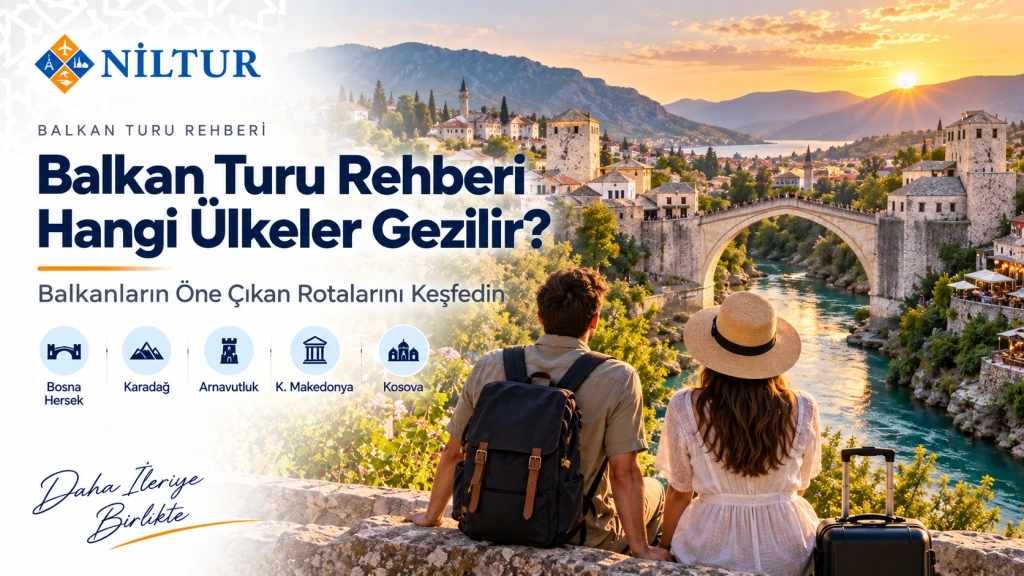
Balkan Tour Guide: Which Countries Are Visited on a Balkan Tour?
The Balkans; one of the most popular international destinations for travelers from Turkey, offering history, culture, natural beauty, and Ottoman heritage together. The opportunity to visit multiple countries and cities within a short distance makes Balkan tours particularly attractive for those who love cultural travel.
Which countries are included in a Balkan tour program can vary depending on the duration and route of the tour. Some programs focus on a few countries, while Grand Balkan tours may cover a broader geography.
What Is a Balkan Tour?
A Balkan tour is a cultural tour aimed at visiting multiple countries located in Southeast Europe within the same travel program.
Programs typically include:
- Historic city centers
- Ottoman monuments
- Natural attractions
- Local markets
- Museums
- Mosques and religious buildings
- Lakes
- Mountainous regions
- Coastal cities
all in one trip.
One of the main advantages of the Balkans is that the distances between cities and countries are relatively short.
Which Countries Are Visited on a Balkan Tour?
Depending on the tour program, the following countries may be included in Balkan tours:
- Bosnia and Herzegovina
- Montenegro
- Albania
- North Macedonia
- Kosovo
- Serbia
- Bulgaria
- Greece
- Croatia
- Slovenia
Every tour route is not the same. Therefore, when answering the question “which countries are visited on a Balkan tour?”, it is necessary to check the specific tour program selected.
What Is a Grand Balkan Tour?
A Grand Balkan tour refers to comprehensive routes that include more countries and cities than standard Balkan programs.
The aim of these tours is to experience the diverse cultures of the region more extensively within a single journey.
In Grand Balkan programs:
- Sarajevo
- Mostar
- Kotor
- Budva
- Shkodër
- Tirana
- Ohrid
- Skopje
- Prizren
such cities may be included in the same route.
The route may vary depending on the program duration and flight schedule.
Sarajevo
Sarajevo, the capital of Bosnia and Herzegovina, is one of the most important stops on Balkan tours.
In the city, influences from the Ottoman, Austro-Hungarian, and modern European periods can be seen together.
Main points of interest include:
- Baščaršija (Old Bazaar)
- Gazi Husrev-beg Mosque
- Sebilj Fountain
- Latin Bridge
- Sarajevo historic bazaar
- The tomb of Alija Izetbegović and the Bosnian Martyrs Cemetery
may be visited.
Sarajevo is among the standout cities for Balkan travels due to its historical, cultural, and spiritual significance.
Mostar
Mostar is one of the most well-known cities in the Balkans.
The symbol of the city, the Stari Most (Old Bridge), is among the most important examples of architectural heritage from the Ottoman period.
In Mostar:
- Stari Most (Old Bridge)
- Old Bazaar
- Koski Mehmed Pasha Mosque
- Surroundings of the Neretva River
can be visited.
The historic texture of Mostar and its river views make it one of the most special stops on a Balkan tour.
Konjic
Located between Sarajevo and Mostar, Konjic stands out with its historic texture along the banks of the Neretva River.
With its bridge remaining from the Ottoman period and its small city center, Konjic can be a short but enjoyable stop on Balkan tours.
Skopje
Skopje, the capital of North Macedonia, is one of the cities where the Ottoman heritage is strongly felt.
In the city:
- Stone Bridge
- Turkish Bazaar
- Mustafa Pasha Mosque
- Macedonia Square
- Davut Pasha Hamam
- Skopje Fortress
can be seen.
In Skopje, the old and new city textures exist side by side.
Ohrid
Ohrid is one of the most important tourism centers in North Macedonia.
The city, established around Lake Ohrid, stands out with its historic structures, natural beauty, and peaceful atmosphere.
Main points of interest:
- Ohrid Old Town
- Lake Ohrid
- Area around St. John's Church
- Samuel Fortress
- Historic bazaar
can be listed.
Ohrid is one of the key stops on a Balkan tour that offers both cultural and nature experiences together.
Prizren
Prizren, one of the most characteristic cities of Kosovo, stands out with its architectural texture dating back to the Ottoman period.
In the city:
- Sinán Pasha Mosque
- Stone Bridge
- Şadırvan Square
- Historic streets of Prizren
can be seen.
Prizren is among the cities that attract the interest of guests coming from Turkey, especially due to its closeness to Turkish and Ottoman culture.
Montenegro: Kotor and Budva
Montenegro is one of the important stops on the Adriatic coast of Balkan tours.
Kotor
Kotor stands out with its walled historic center and its location on the Adriatic coast.
The old town, with its narrow streets and historic buildings, is among UNESCO World Heritage sites.
Budva
Budva is known for its coastal atmosphere and its historic old town.
The inclusion of both Kotor and Budva in the same program adds Adriatic views to the cultural tour.
Albania: Shkodër and Tirana
Albania is also part of many Balkan routes.
Shkodër
Shkodër is one of the most important cities in the northern part of the country. It stands out with its historic structure and natural beauties in its surroundings.
Tirana
The capital, Tirana, offers a more modern and lively city experience.
Depending on the program route, either one or both of these cities may be visited.
Are Balkan Tours Visa-Free?
Visa regulations for Balkan countries may vary depending on the country and travel date.
While some Balkan countries may offer visa-free entry to citizens of the Republic of Turkey under certain conditions, visas may be required for some countries.
Therefore, when selecting a visa-free Balkan tour, it is necessary to separately check the entry requirements for all countries included in the program.
Since visa regulations can change, up-to-date official conditions should be taken as a basis before traveling.
Is a Passport Required for a Balkan Tour?
A valid passport is required for international Balkan tours.
It is important that the passport meets the validity requirements on the travel date.
Even if a visa is not required in some countries, the passport requirement remains.
Therefore, before traveling:
- Passport validity period
- Visa requirements
- Entry rules for the country
should be checked.
How Many Days Should a Balkan Tour Be?
Balkan tours can be prepared with different durations.
For example:
- 3 nights 4 days
- 5 nights 6 days
- 6 nights 7 days
- 7 nights 8 days
programs may be available.
Short tours may focus on a few cities or countries, while longer programs offer a more comprehensive route.
For guests visiting the Balkans for the first time, 5-7 day programs can be a balanced option to get to know the region.
When Is the Best Time to Visit a Balkan Tour?
The Balkans are a region that can be visited in all four seasons, but the travel experience varies by season.
Spring
April, May, and June months can be preferred for mild weather conditions and the revival of nature.
Summer
July and August months are warmer and busier. Coastal cities, in particular, may be crowded during this period.
Autumn
September and October months may be advantageous for guests seeking a calmer atmosphere and mild weather.
Winter
While some cities have a different atmosphere in winter, road transport and weather conditions may affect the tour program.
Bus or Plane for a Balkan Tour?
Balkan tours can be planned both with flights and primarily by road.
Flight-Based Balkan Tours
Having the initial and final transportation by plane can reduce the total travel time.
Transfers between countries after arrival can be made with private buses.
Bus-Based Balkan Tours
Programs starting by road from Turkey generally have a different route and duration structure.
When choosing a tour, the impact of the mode of transport on the total travel time should be considered.
How Much Money Is Spent on a Balkan Tour?
The amount of personal spending varies according to the guest's shopping and dining preferences.
Outside the tour fee:
- Lunches
- Beverages
- Souvenir shopping
- Personal expenses
- Activities chosen outside the program
additional budget may be allocated.
Since multiple countries are visited, it should also be kept in mind that different currencies may be used.
Food Culture on a Balkan Tour
Balkan cuisine can offer options very close to the taste buds of Turkish guests.
In the region:
- Meatballs and meat dishes
- Varieties of börek (pastry)
- Soups
- Grilled dishes
- Desserts
- Coffee culture similar to Turkish coffee
are commonly seen.
In particular, traces of Ottoman cuisine can be found especially in Bosnia and Herzegovina, North Macedonia, and Kosovo.
What Should Be Considered When Choosing a Balkan Tour?
When comparing programs, instead of evaluating only based on price, it is beneficial to look at the following criteria:
- Which countries are being visited?
- How many cities are seen?
- How close are the hotels to the city center?
- What are the flight times?
- Are evening meals included?
- Are the excursions in the program included in the price?
- Is there enough free time?
- How is the guide service?
- How much travel is done between cities?
- Are there extra tours?
Especially in programs that include "many countries", it is important to evaluate daily travel times as well.
Is Visiting More Countries Always Better?
No. Having a higher number of countries in a tour does not always mean a higher quality program.
In overly intensive programs, a significant part of the day may be spent on the bus, and free time in cities may be reduced.
Therefore, when selecting a route:
number of countries + time spent in cities + transport distances
should be evaluated together.
A balanced program offers the opportunity to better experience the visited cities rather than just seeing many places.
Participation in Balkan Tours from Bursa
For guests wishing to join a Balkan tour from Bursa, the flight and transfer details of the program are important.
In some of Niltur's international programs, transfer organization from Bursa to airports in Istanbul may be provided.
Additionally, Bursa-departure Balkan tour options may also be planned for certain periods.
Exact departure and transfer information will be specified in the relevant tour program.
Niltur Balkan Tours
In Niltur Balkan programs, it is aimed to create balanced routes that bring together historical, cultural, and natural values.
Depending on the tour program, different Balkan cities such as from Sarajevo to Mostar, from Skopje to Ohrid, and from Prizren to the Adriatic coast can be visited in the same journey.
When selecting a program, the following on the current tour page should be reviewed:
- Flight details
- Hotels
- Daily route
- Included services
- Visa information
must be examined.
Frequently Asked Questions
Which countries are visited on a Balkan tour?
Depending on the program route, Bosnia and Herzegovina, Montenegro, Albania, North Macedonia, Kosovo, Serbia, Bulgaria, and other Balkan countries may be visited.
What is a Grand Balkan tour?
It refers to comprehensive tour programs that cover multiple Balkan countries and a wider city route.
Are Balkan tours visa-free?
Some countries may offer visa-free travel opportunities to Turkish citizens. However, the current entry conditions for every country on the tour route must be checked separately.
Is a passport required for a Balkan tour?
Yes. A valid passport is required for international Balkan tours.
How many days should a Balkan tour be?
It depends on the scope of the program. 5-7 day tours can be a balanced option for those who want to see multiple cities.
What is the best period for a Balkan tour?
Spring and autumn are frequently preferred periods for cultural tours due to mild weather conditions. Summer months are also suitable, especially for the Adriatic coast.
Which cities must be seen on a Balkan tour?
Sarajevo, Mostar, Skopje, Ohrid, and Prizren are among the standout cities for those who want to get to know Balkan culture.
Is there a Balkan tour departing from Bursa?
Depending on the program period, Balkan tour options departing from Bursa or with airport transfers from Bursa may be offered. Current departure information should be checked from the details of the relevant tour.